
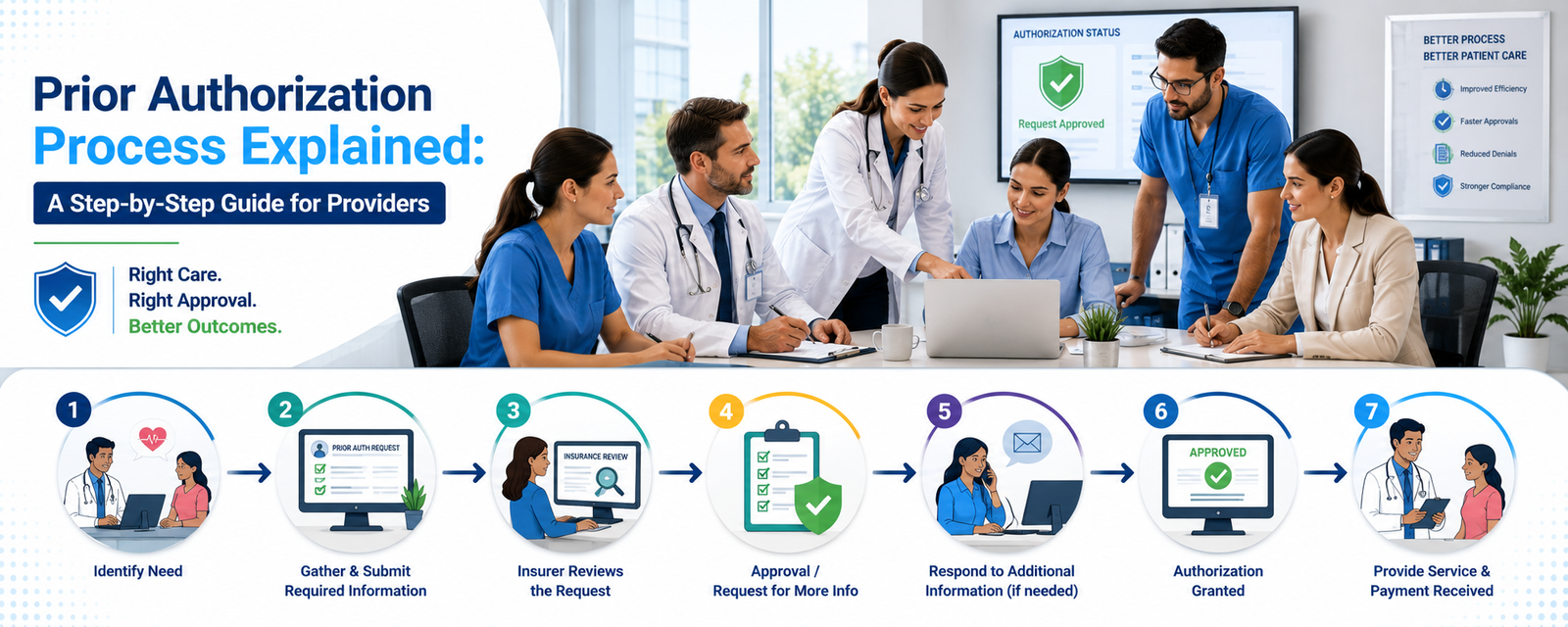
Prior Authorization Process Explained: A Step-by-Step Guide for Providers
What Is Prior Authorization, and Why Does It Exist?
The prior authorization process explained simply: it's the approval a health plan requires before it will cover certain procedures, medications, or services. Insurers use it as a cost-control and medical-necessity check confirming that a treatment is appropriate before agreeing to pay for it.
For providers, prior authorization sits squarely in the revenue cycle. A missed or delayed authorization doesn't just slow down patient care — it's one of the most common reasons claims get denied after the fact. Understanding the process well enough to move through it quickly is as much a billing skill as a clinical one.
The Prior Authorization Process, Step by Step
1. Determine whether authorization is required
Not every service needs it. Check the payer's policy or authorization list for the specific CPT/HCPCS code and the patient's specific plan requirements vary by insurer and even by plan within the same insurer.
2. Gather the clinical documentation
This typically includes the diagnosis, treatment history, prior therapies attempted, and clinical notes supporting medical necessity. Incomplete documentation is the single most common cause of delay.
3. Submit the request
Most payers now accept electronic submissions through a portal or clearinghouse, though some still require fax or phone. Include every required field a request missing one data point often gets kicked back for resubmission rather than reviewed.
4. Track the request status
Authorization requests don't resolve themselves. Someone needs to follow up if a decision hasn't come back within the payer's stated turnaround window.
5. Receive the determination
The payer approves, denies, or requests more information ("pends" the request). A pend isn't a denial it's a request for more documentation, and responding quickly keeps the request moving.
6. Appeal if denied
If the request is denied, most payers allow an appeal with additional clinical justification. This is where a peer-to-peer review with the payer's medical director sometimes comes into play for complex cases.
How Long Does Prior Authorization Take?
Turnaround time varies widely by payer and by whether the request is standard or urgent. Standard requests commonly take anywhere from a few days to two weeks; urgent or expedited requests are typically required to be reviewed much faster often within 24 to 72 hours under most state and payer rules. The specific timeline always depends on the payer's own policy, so confirming their stated turnaround window is the only way to know for a given request.


Common Reasons Prior Authorization Requests Get Delayed or Denied
- Missing or incomplete clinical documentation the most frequent cause by far
- Wrong or outdated CPT/HCPCS code submitted for the requested service.
- Requesting the wrong type of authorization (e.g., submitting for a procedure code when the payer requires a separate authorization for the associated device)
- Not confirming the requirement first assuming a service doesn’t need authorization when the plan actually requires it
- Missed follow-up the request sits in queue with no one tracking whether the payer responded
Many of these same root causes are behind claim denials in medical billing more broadly a denied or delayed authorization upstream often becomes a denied claim downstream.
How Practices Can Reduce Prior Authorization Delays
- Verify requirements before the appointment, not after the service is rendered, so there’s no scramble to get retroactive approval.
- Standardize your documentation templates so clinical notes consistently include what payers ask for, rather than reconstructing justification after the fact.
- Assign clear ownership for tracking pending requests an authorization with no one accountable for follow-up is the most common way requests quietly expire.
- Use accurate, up-to-date coding. Errors here don’t just affect billing — they’re one of the most common reasons an authorization request gets flagged or rejected outright. Practices that also invest in medical coding accuracy tend to see fewer authorization headaches as a result.
- Consider outsourcing the authorization workload if it’s consistently consuming staff time better spent elsewhere — this is exactly the kind of specialized, repetitive process an outsourced prior authorization service is built to absorb.
A billing company charging a slightly higher percentage with a strong denial management track record will often put more net revenue in your pocket than a cheaper option with a high denial rate and no real appeals process. As a general benchmark, the Medical Group Management Association (MGMA) considers a net collection rate near 96% to be a healthy target — a useful number to compare against when a billing company shares their own performance data.
Dr. David Reynolds, MD
Orthopedic Surgeon
Every claim represents quality patient care. Accurate billing ensures that care is properly recognized and reimbursed.
Frequently Asked Questions
Struggling to keep up with prior authorization requests?
TruClaim RCM's prior authorization services handle submission, tracking, and follow-up so approvals don't fall through the cracks get a free billing assessment to see where your process stands.

Medical Billing
Worldwide clients
